Vintage Wildflowers Watercolor Clipart: A Design Review for Real Projects
As an embroidery designer with years of experience working on both personal and commercial projects, I always look for design files that not only inspire visually but also hold up under the scrutiny of real-world stitching. The Vintage Wildflowers Watercolor Clipart caught my eye recently for its delicate charm and nostalgic appeal. In this review, I’ll walk through how it performed when I applied it to a custom embroidered tote bag — a popular item among Etsy sellers and handmade gift creators — and what you should consider before using it in your own crafts or branding efforts.
First Impressions: Mood and Visual Personality
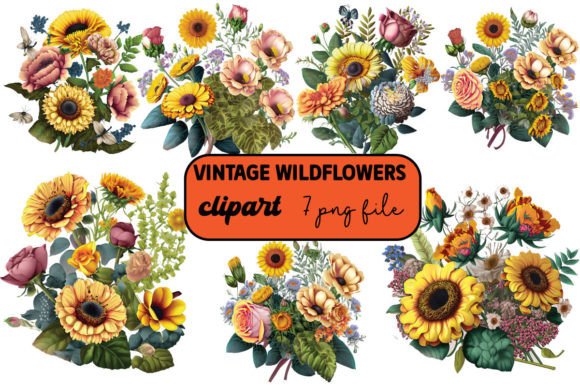
The moment I unzipped the digital file, I was struck by the softness and elegance of the Vintage Wildflowers Watercolor Clipart. It evokes a sense of vintage nostalgia with its gentle hues and hand-painted feel. The composition is balanced, featuring a cluster of wildflowers in various sizes and shapes, arranged in a natural, flowing manner. This kind of layout is ideal for creating a warm, artistic impression without overwhelming the viewer.
From a design perspective, the visual personality of this file feels like it belongs on handmade products, personalized gifts, or boutique-style apparel. It’s not overly intricate, which makes it versatile, but still detailed enough to stand out as a premium embroidery project.
What Kind of Embroidery Project Does It Fit?
- Tote Bags: Especially those used for weddings, baby showers, or holiday markets. The watercolor aesthetic complements linen or cotton blends well.
- Sweatshirts & T-Shirts: Perfect for casual designs with a touch of sophistication. It works especially well in tonal thread color schemes.
- Nursery Decor: Its soft tones and floral theme make it a great fit for baby items or wall art in a child's room.
- Embroidered Patches: When scaled down, the design maintains clarity and becomes a charming decorative accent.
Real-Life Embroidery Performance
I tested the Vintage Wildflowers Watercolor Clipart on a medium-sized tote bag made from cotton-linen blend fabric. My first step was to adjust the stitch density and choose appropriate thread colors. The design features mostly satin stitch and some fill stitch areas, which translated well into the final stitched piece. However, I noticed that the more subtle gradients required careful attention to ensure they didn’t become muddied during the embroidery process.
One thing I appreciated was how the file responded to scaling. At 6x8 inches, the flowers remained crisp and recognizable, though I had to test smaller versions separately. As a general rule, if you're planning to use this design on a custom apparel item like a cap or hat, you may need to simplify or reduce certain elements to maintain clarity.
When considering commercial embroidery applications, such as branded aprons or kitchen towels for a small shop product line, the design has strong potential. The watercolor style adds a level of uniqueness that can elevate your design assets and help your brand stand out in a crowded market. That said, I recommend running a few test samples to see how it holds up across different fabric types and uses.
Customer Reaction and Giftability
In a recent craft fair, I showed off a sample tote with the Vintage Wildflowers Watercolor Clipart design. Customers were immediately drawn to it, commenting on how “soft” and “personal” it looked. Many asked if it could be adapted for baby clothes or holiday gifts. This kind of reaction is exactly what creative entrepreneurs and Etsy sellers want — it speaks to sentimentality and quality.
When used correctly, the design enhances the visual appeal of any product while maintaining a professional finish. It doesn’t scream boldness, but rather invites appreciation through detail and texture. This subtlety makes it a strong contender for handmade product lines where craftsmanship and aesthetics are key selling points.
Where to Use It Carefully
While the Vintage Wildflowers Watercolor Clipart is undeniably beautiful, there are situations where it might require special handling or even reconsideration. Here are a few real-life scenarios where I found the design needed extra attention:
- Small Hoop Sizes: The intricate nature of the wildflowers means that reducing the design too much can cause loss of detail. Always confirm your hoop size before starting.
- Textured Fabrics: On canvas or denim, the design may appear less fluid due to the fabric’s uneven surface. Consider adjusting stitch types or using a heavier stabilizer.
- Stretchy or Thin Fabric: These materials can distort the shape of the flowers, especially if the design includes tight curves or fine lines. A tear-away stabilizer alone may not be enough.
- Dark Backgrounds: While the design is vibrant, it loses impact on darker fabrics unless you use high-contrast thread colors. Test it in black and white to evaluate visibility.
- Curved Surfaces (e.g., Caps): The flow of the design needs to be adjusted to follow the curve of the surface to avoid distortion.
- Frequent Washing: If the design will go on a tea towel or other washable item, check the stitch density and thread durability. High-density areas may pill over time.
Design Notes for Best Results
- Test on Scrap Fabric First: Before committing to a customer order or production run, stitch the design on a scrap of your intended fabric to assess how it behaves.
- Check Thread Color Contrast: The original palette is soft, but depending on your fabric choice, you may need to switch to darker or lighter thread shades for better visibility.
- Review Stitch Density: Especially in fill areas. Too dense and it looks stiff; too sparse and it appears incomplete. Find a happy medium based on your fabric.
- Confirm Hoop Size: Make sure the dimensions of your project match the recommended hoop size. Adjusting after stitching is not ideal.
- Inspect Small Details: Look closely at the edges of petals and leaves. Some may need reinforcing or reworking for optimal stitch definition.
- Use Proper Stabilizer: Depending on the fabric, you may need to layer stabilizers for best results, particularly with stretchy or thin materials.
- Confirm Licensing: If you plan to sell finished products or digital embroidery files, always double-check the licensing terms included in the product description. This is essential for commercial embroidery work.
Professional and Branding Implications
For small business owners and handmade shop owners, the Vintage Wildflowers Watercolor Clipart offers a lot of value when used appropriately. Its classic yet modern feel aligns well with brands that emphasize quality, tradition, and artisanal touches. You can integrate it into printable mockups for online listings, helping buyers visualize the design on their chosen product.
It’s also worth noting that the design’s consistent style allows for easy brand consistency. Whether you’re embroidering a sweatshirt or designing a set of holiday gifts, the same motif can be reused across multiple items without looking disjointed. This helps build product recognition and reinforces your creative identity.
Stitch Clarity and Presentation
After several tests, I found that the design’s stitch clarity depends heavily on the machine and settings used. On a mid-range embroidery machine, the result was clean and presentable. For higher-end machines, the details really shine. But if you're using a basic setup, expect some minor imperfections in the smallest parts of the design.
Because the design isn’t densely stitched, it gives the final product a breathable, lightweight look — which is excellent for summer embroidered patches or custom apparel items. However, for those who want a more raised or dimensional effect, you may need to add additional layers or opt for an applique technique.
Final Thoughts for Makers and Sellers
The Vintage Wildflowers Watercolor Clipart is a solid addition to any embroidery designer's library, especially if you're targeting customers who appreciate vintage-inspired graphics and subtle elegance. It fits naturally into craft business offerings and can enhance the perceived value of personalized gifts or small shop merchandise.
That being said, don't take the file at face value. Every machine embroidery design needs to be tailored to the specific project. Take the time to test, adjust, and refine. Ask yourself whether the design’s mood and character suit your audience and application. Will it work on stretchy fabric? Can it be reduced without losing charm? Does it complement the rest of your design assets?
With thoughtful preparation and a bit of trial and error, the Vintage Wildflowers Watercolor Clipart can become a reliable part of your creative toolkit. Just remember: the beauty of embroidery lies not just in the design, but in how well it translates into the final finished product that touches your customers’ lives.